A client trains consistently. They follow the nutrition plan. They rarely miss a session.
Yet months go by, and almost nothing changes.
So what do most coaches do?
They reduce calories.
Add more cardio.
Increase training volume.
Change the exercises.
Sometimes this works.
But more often than not, the client still doesn’t progress.
The problem isn’t always the program.
The problem is that the program is being changed before the coach understands what is actually limiting the client.
This is one of the biggest differences between an average coach and a high-performance coach.
❎ Average coaches react to symptoms.
☑️ Elite coaches identify causes.
BEFORE CHANGING ANYTHING, THEY ASK:
What is preventing this client from adapting?
What system is limiting progress?
Is this really a programming problem?
At Strength Community, we teach coaches to stop guessing and start making decisions based on assessment, physiology, biomechanics, and metabolism.
Because once you understand what is actually limiting your client, every decision becomes easier.
Below are three of the seven hidden reasons why clients stop progressing ⤵️
HIDDEN REASON No. 1
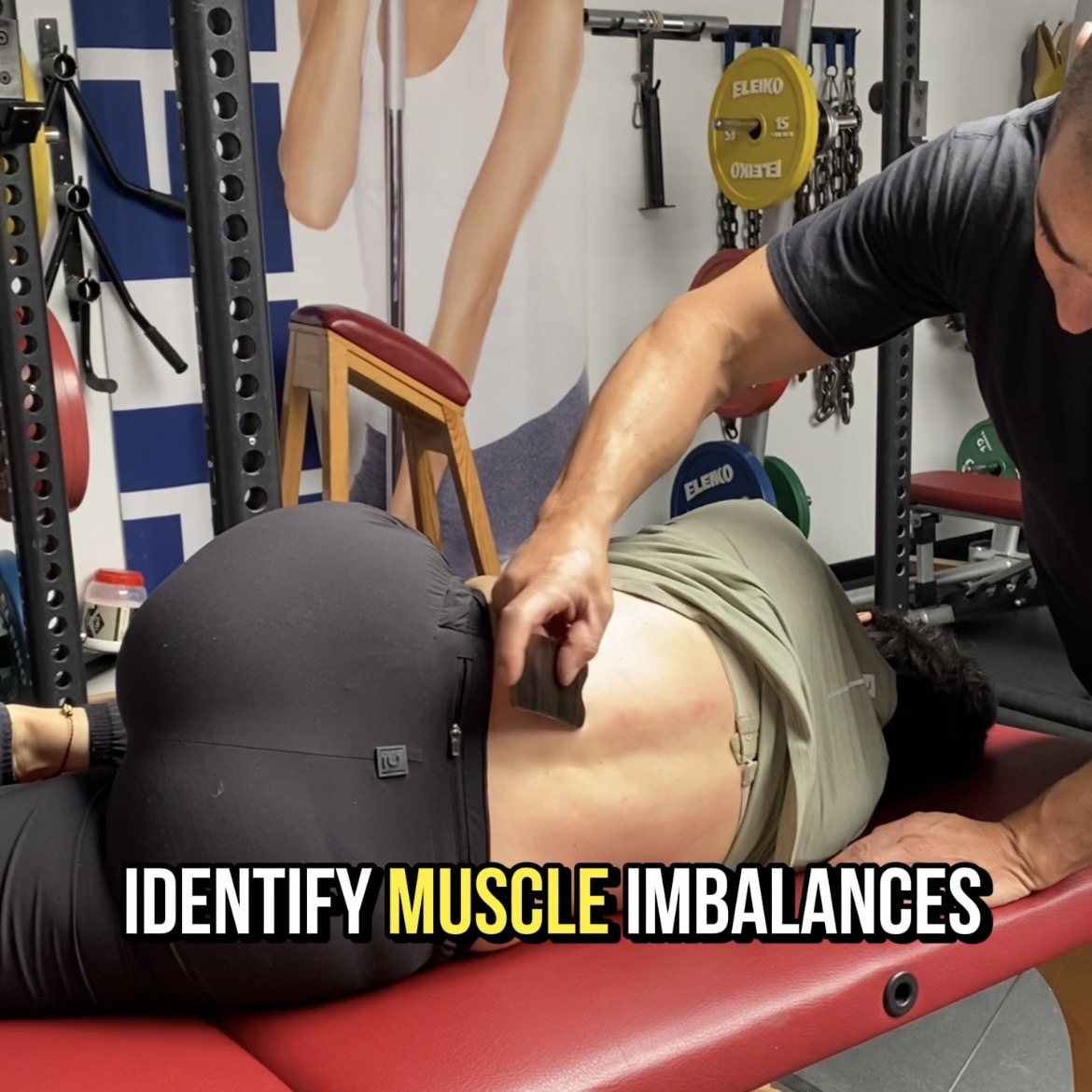
✔️Training reinforces existing compensations
HIDDEN REASON No. 2
 The central nervous system doesn’t respond equally to the same training program
Imagine two athletes.
They have similar goals.
Similar age.
Similar body composition.
They follow the exact same training program.
Yet after 8 weeks, one athlete makes outstanding progress while the other barely changes.
Most coaches assume something went wrong.
- Maybe the second athlete lacked motivation.
- Maybe nutrition wasn’t good enough.
- Maybe recovery was poor.
Sometimes that’s true.
But very often, the explanation is much deeper.
Different central nervous systems respond differently to the exact same training stimulus.
- The same volume.
- The same intensity.
- The same tempo.
- The same rest periods.
- The same frequency.
For one athlete, these variables create the perfect environment for adaptation.
 For another, they produce too much stress—or not enough stimulation.
WHY ?
Because every client has a unique neurochemical profile.
Neurotransmitters such as dopamine, acetylcholine, serotonin, and GABA influence how people respond to challenge, novelty, structure, recovery, and training stress.
- Some clients thrive on high intensity and constant variation.
- Others need more volume or constant volume variation
If coaches ignore these differences, they often blame the athlete instead of the program.
☑️ THE SOLUTION
The solution isn’t changing exercises randomly.
 The solution is understanding how the client’s central nervous system is built and adapting training variables accordingly.
Once you understand this, programming becomes dramatically more precise. You’re no longer guessing why one client progresses while another doesn’t. You’re designing programs that match how each individual athlete actually adapts.
This is exactly what coaches learn during the Neurotransmitter-Based Program Design seminar.
❌
Not personality tests.
Not motivation tricks.
✅
A physiological framework for building programs around the athlete’s nervous system
HIDDEN REASON No. 3
✔️Metabolic limitations
Now imagine another situation.
 Two clients eat approximately the same number of calories.
They train with the same frequency.
They follow their programs consistently.
Yet one steadily loses body fat, builds muscle, and recovers well.
The other reaches a plateau—or even starts gaining body fat despite doing everything “right.”
Most coaches immediately adjust calories.
Or increase cardio.
Or prescribe another nutrition plan.
 But sometimes the limiting factor isn’t nutrition.
And it isn’t training, either.
It’s metabolism.
The human body doesn’t simply respond to calories.
It responds to hormones, stress, recovery capacity, inflammation, sleep quality, insulin sensitivity, gut health, and dozens of physiological processes happening beneath the surface.
Two identical nutrition plans can produce completely different outcomes because two bodies rarely function in the same way.
For example:
- A client experiencing chronic stress may struggle to lose fat even while maintaining a calorie deficit.
- Poor sleep can significantly reduce recovery and blunt adaptation to training.
- Reduced insulin sensitivity changes how nutrients are partitioned and stored.
- Hormonal imbalances influence where fat accumulates, how easily muscle is built, and how efficiently energy is used.
These aren’t motivation problems.
They’re physiological limitations.
This is why elite coaches don’t stop at calories and macros.
They first try to understand what the client’s metabolism is telling them.
One of the tools we teach is the analysis of body fat distribution through a 14-site skinfold assessment.
Fat accumulation isn’t completely random.
Different accumulation patterns may provide valuable information about metabolic function, hormonal influences, recovery capacity, lifestyle, and stress.
Combined with a complete assessment, nutrition history, and physiological data, these patterns help coaches make more informed decisions instead of relying on assumptions.
This is the foundation of the Metabolic Balance seminar.
Coaches learn how to connect metabolism, hormones, nutrition, supplementation, and training into one integrated strategy rather than treating each factor separately.
Because changing calories without understanding metabolism is often just another form of guessing.
These Are Only 3 Reasons
The three causes you’ve just read are closely connected.
Unfortunately, many coaches treat them as completely separate problems.
They improve movement.
Or they study programming.
Or they learn nutrition.
But they rarely connect everything into one system.
High-performance coaching works differently:
01
Every coaching decision begins with assessment.
02
Assessment determines what should be corrected.
03
That information guides program design.
04
Program design is then individualized according to the athlete’s brain chemistry.
05
Strength and mobility interventions immediately remove movement and strength limitations
06
Metabolic and hormonal assessment explains why the body accumulates fat in certain areas..
07
Blood biomarkers provide another layer of actionable physiological information
08
Completely individualized programming, nutrition, and supplementation support the entire process.
Nothing exists in isolation.
Every decision influences the next.
This is why elite coaching isn’t about collecting more techniques.
It’s about understanding how all of these systems work together.
And once coaches understand that framework, they stop asking:
BEFORE
“What exercise should I use?”
INSTEAD
“What is actually limiting this athlete right now?”
Why most continuing education doesn’t change the way coaches think?
Most coaches genuinely want to improve.
- They invest in certifications.
- Attend conferences.
- Read research.
- Watch webinars.
- Follow respected coaches online.
Yet months later, many of them are still making decisions exactly the same way they did before.
Not because the information was poor.
But because information alone rarely changes decision-making.
Most courses teach techniques.
- A new assessment.
- A new exercise.
- A new correction.
- A new mobility drill.
- Another programming method.
These tools can be valuable.
But without understanding when, why, and for whom to use them, they simply become another collection of ideas.
Knowledge grows results
At Strength Community, the goal is different.
The objective isn’t to give coaches another toolbox.
The objective is to change the way they think.
Every seminar builds on the previous one.
Structural Assessment
Structural Assessment teaches you how to identify what is actually limiting your client before writing a program.
Science of Program Design
Science of Program Design teaches you how to organize training variables into a logical progression instead of relying on intuition.
Neurotransmitter-Based Program Design
Neurotransmitter-Based Program Design explains why two athletes require completely different loading strategies despite having identical goals.
Instant Strength & Mobility
Instant Strength & Mobility gives coaches practical methods to improve movement quality immediately while understanding why those methods work.
Metabolic Balance
Metabolic Balance connects physiology, nutrition, hormones, and body composition into one assessment system.
Advanced Metabolic Balance
Advanced Metabolic Balance takes the process even further by teaching coaches how to interpret blood biomarkers and use physiological data to make more accurate decisions.
None of these modules stand alone.
Together, they create one complete coaching system.
☑️ THE SEMINARS ARE INTENTIONALLY DELIVERED IN LIVE FORMAT
Not because information can’t be taught online.
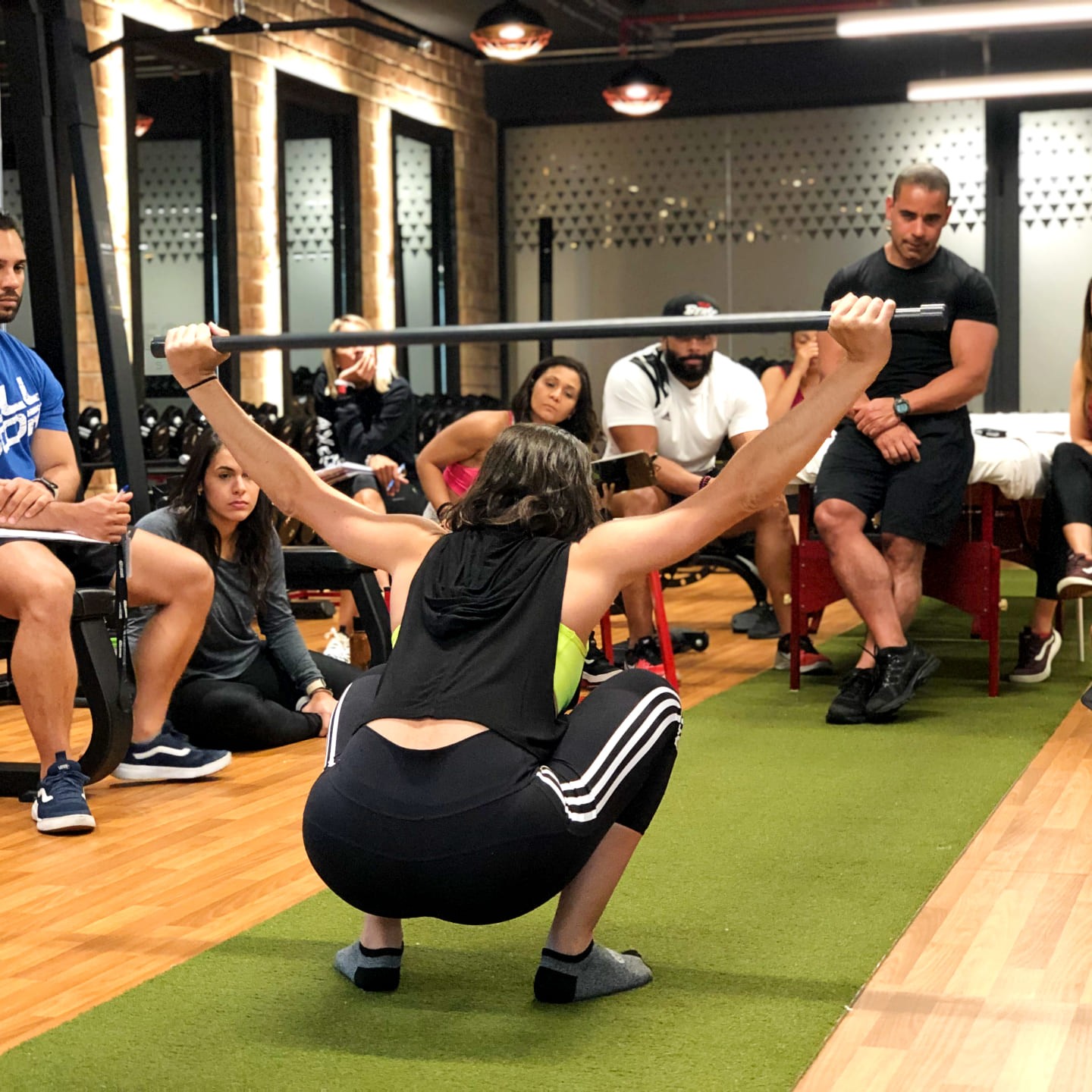
But because high-level coaching is built through observation, discussion, assessment, practice, and feedback.
Throughout the seminar, coaches don’t simply listen to lectures.
01
They observe and do real assessments and movement analysis.
02
Experience real training sessions in their own bodies.
03
Discuss real case studies.
05
Ask questions while decisions are being made.
06
Receive direct feedback from experienced coaches.

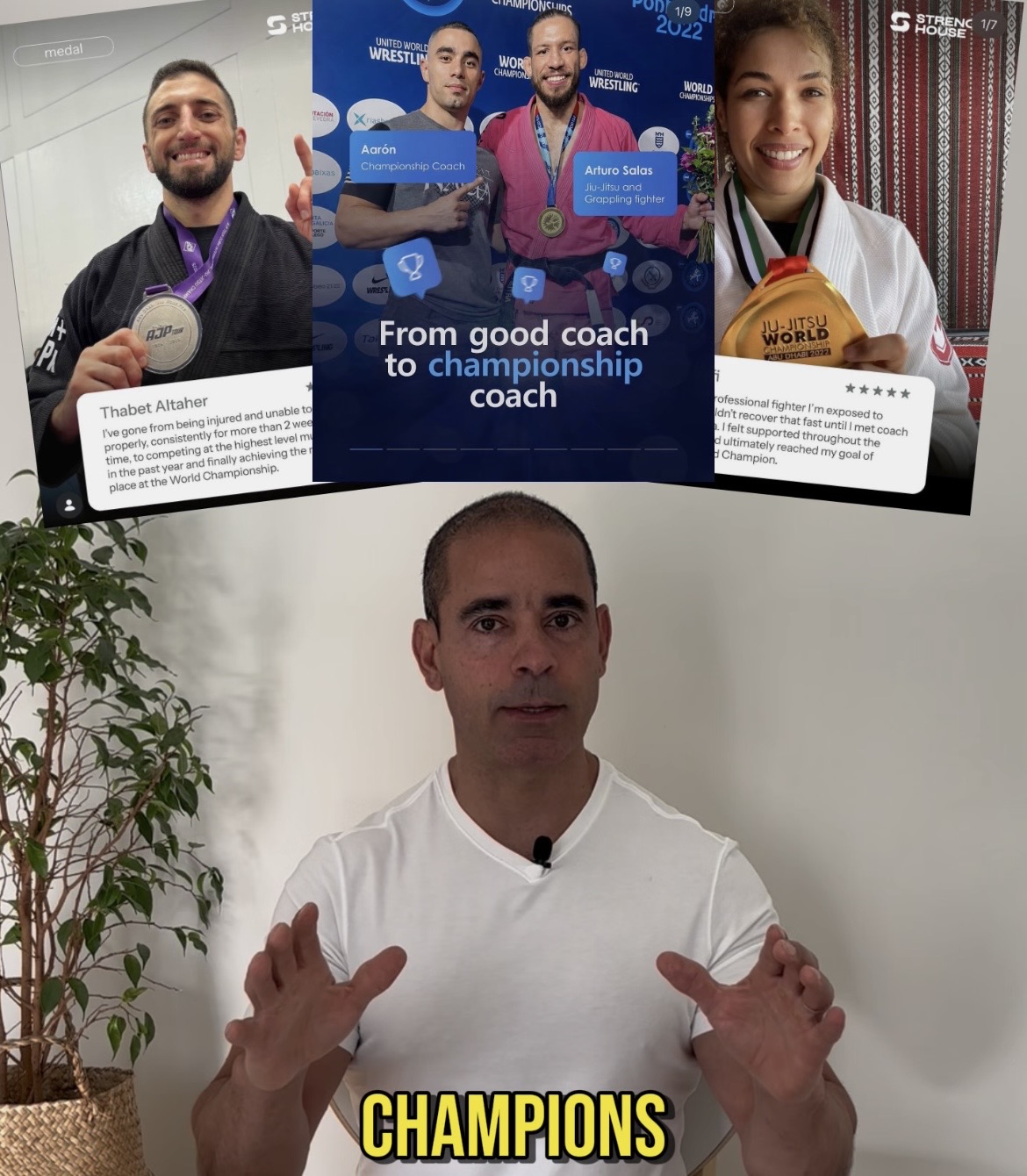
Carlos Castro, founder of Strength Community.
Carlos has worked with athletes competing at the highest international level, including Olympic medalists, World Championship medalists, Pan American Games athletes, and national champions.
His coaching system has been developed through decades of practical application across multiple sports—not only in theory, but under the pressure of real competition.
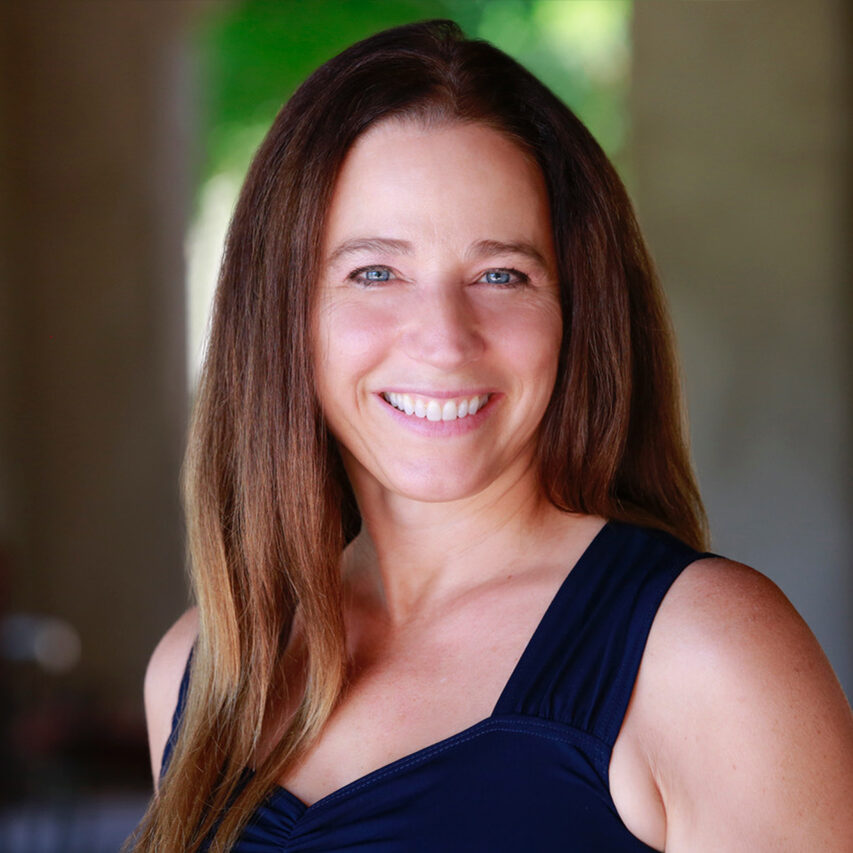
Dr. Sonja Pettersen
Dr. Sonja works with professional athletes from organizations including the NFL and MLB.
Her expertise focuses on physiology, blood biomarker interpretation, recovery, and performance optimization.
Together, they combine biomechanics, physiology, metabolism, and program design into one integrated coaching framework.
Strength Community Seminars
📍 Eleiko Sport Center, Halmstad, Sweden
📅 September 23 – October 4, 2026
10 days
of immersive, in-person education
6
interconnected modules
Maximum of 20
coaches per class
TAP BUTTON BELOW TO BOOK FREE CONSULTATION WITH CARLOS